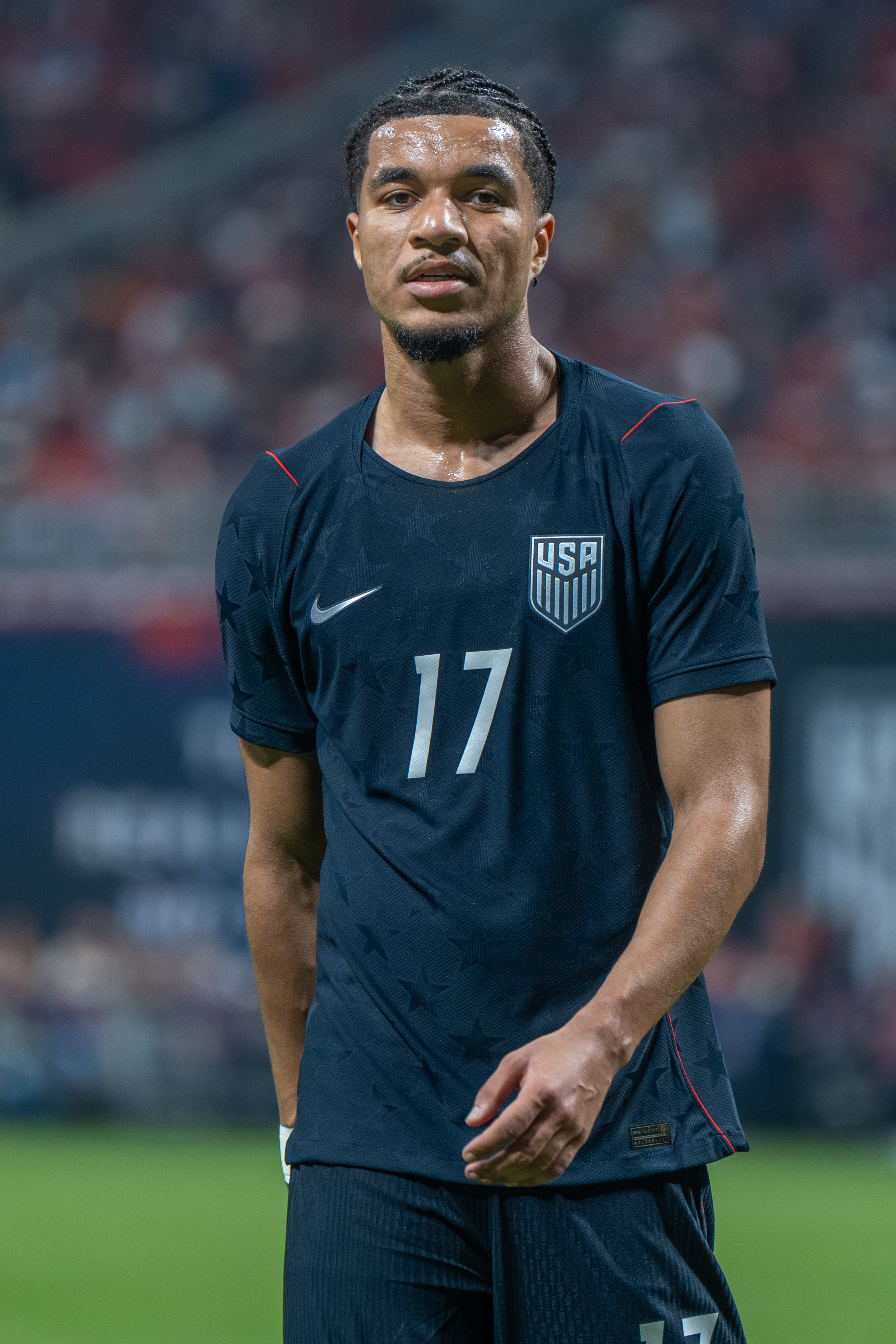
The US men gathered in Atlanta for a pair of high-profile friendlies last week to close out the penultimate international window before this summer’s World Cup. The opponents were the real deal, ninth-ranked Belgium and sixth-ranked Portugal, the reigning UEFA Nations League champions. The results were humbling. The US fell 5-2 to Belgium on Saturday before losing 2-0 to Portugal the following Tuesday, both at Mercedes-Benz Stadium.
There were more positives than the scorelines would suggest, but there is no sugarcoating a 0-2 window against European competition. Both games followed a similar pattern, encouraging first halves followed by second halves where the gap in class became undeniable. If you only watched the first 45 minutes of each game, you may come away convinced the US could go toe-to-toe with some of the top contenders to win this summer’s World Cup. But the full 90 minutes told a different story about where this team currently sits in the pecking order.
The good news is they won’t face a team of this caliber in the World Cup until the knockout rounds. The group stage draw (Paraguay, Australia, and Türkiye) is manageable enough that the US should advance. But if they are going to make a deep run at the World Cup, they will need to beat teams of this caliber multiple times. That will require them to be far more clinical with their big chances and clean up the defensive lapses that top tier competition capitalize upon.
Belgium (5-2 Loss)
The Belgium game was a tale of two halves in the most extreme sense. The US came out with energy and purpose, creating several good chances early. Tim Weah was causing problems down the right wing and Weston McKennie nearly scored from a corner in the 17th minute that required a desperate save from Belgium’s keeper Senne Lammens. Folarin Balogun forced another save with a shot from a Belgium turnover.
McKennie redeemed the earlier near-miss in the 39th minute, timing his run perfectly to meet an Antonee Robinson corner kick and tucking it into the net with the inside of his right foot from the six-yard box to give the US a first-half lead. It was a deserved lead and it looked like the US might take momentum into the break. However, Belgium equalized right before halftime when Matt Turner punched out a Jérémy Doku shot from the left side, only for the clearance to land at the feet of center back Zeno Debast well outside the box. Before the US could close him down, Debast settled it and fired a low knuckleball into the far corner.
That pattern, a ball arriving behind the play to a man who wasn’t closed out quickly enough, would haunt the US throughout this window.
The second half was a disaster. Pochettino replaced Johnny Cardoso with Cristian Roldan at the break (reportedly a pre-planned change due to discomfort Cardoso felt earlier in the week), and the midfield never recovered its balance. Just eight minutes into the half, Doku, who tormented the US defense all day, drew the entire back line toward him before a cutback found Amadou Onana running into the box for a clinical finish to make it 2-1. Moments earlier, Pulisic had hammered a golden chance over the bar after a brilliant dribble into the box, a sequence that perfectly encapsulated the American experience in this window: creating chances but failing to convert, then immediately conceding.
From there it only got worse. A Tim Ream handball on a shot from the top of the box resulted in a penalty that Charles De Ketelaere converted to make it 3-1. Then substitute Dodi Lukébakio added two more in the 68th and 82nd minutes, the first a curling beauty and the second capitalizing on a poor US clearance. Patrick Agyemang pulled one back in the 87th minute after Ricardo Pepi forced a turnover with his press, a small silver lining from two substitutes who at least showed fight when the game was already lost.
Portugal (2-0 Loss)
The Portugal match was a more measured affair but ended with a loss all the same. Pochettino made six changes from the Belgium lineup, inserting Matt Freese in goal, Chris Richards and Auston Trusty at center back, Alex Freeman at right back (with Weah moving up to right wing), and Aidan Morris and Sebastian Berhalter into the midfield. The most notable tactical tweak was deploying Pulisic as a false nine in an effort to get him closer to goal amid a scoring drought that has now stretched to zero goals in 2026 for club and country. While the US did create some danger in the first half, the experiment was largely unsuccessful and unlikely to be repeated in the World Cup unless there is a run of injuries in the striker pool.
The US was the more proactive team for much of the first half, finishing with eight shots to Portugal’s three. Pulisic was involved in several promising moves but repeatedly struggled with the final shot or pass. McKennie drove forward with purpose and Weah tested the waters down the right, but the Americans couldn’t land a blow, and Portugal made them pay in the 36th minute. A midfield turnover allowed Portugal to spring a quick counter, with a splitting pass between Richards and Trusty finding Bruno Fernandes, who left a brilliant back-heel for Francisco Trincão to slot home. It was the kind of precise, incisive attacking sequence that the US simply couldn’t match going the other way.
The US stayed competitive into the second half, but Portugal put it away in the 59th minute on another set piece that the defense failed to deal with, echoing the Belgium game. Fernandes found João Félix at the top of the box off a corner kick, and Félix found ample time to take a poor touch and still hit a strong shot, picking out the far corner with a half-volley. Yet another open man behind the play who wasn’t closed out in time.
Pochettino made substitutions at halftime, bringing on Agyemang for Pulisic, Tanner Tessmann for McKennie, and Max Arfsten for Robinson. The fresh legs created some energy. Tessmann in particular looked sharp in his cameo, showing a willingness to progress the ball and compete in the middle of the park. But the US couldn’t generate a real threat on goal despite finishing with 12 total shots, managing just 0.69 expected goals for the entire match. Neither Morris or Berhalter didn’t add much to change the complexion of the game from midfield.
Stock Report
Midfield: Tillman is a Starter
Malik Tillman was the best player for the US in this window by a comfortable margin. Against Portugal, he was the most active American on the field, leading the team in chance creation and key passes while showing the clever movement and combination play that has made him a standout at Bayer Leverkusen this season. He had a positive impact against Belgium as well, creating three chances as a central midfielder.
What separates Tillman from the other midfield options is his ability to progress the ball with purpose and take defenders on in tight spaces, something the US attack desperately needs. He could start in the World Cup as an attacking midfielder in a 4-2-3-1 or 3-4-3 or if McKennie is deployed higher up the pitch, Tillman could slot into a box-to-box role. Either way, some configuration of Adams-McKennie-Tillman looks like the strongest midfield trio available for this summer, especially with Gio Reyna seeing very limited minutes for his club.
None of the other midfielders made a particularly strong case in this window. Tessmann looked effective in his cameo against Portugal and Johnny Cardoso was solid enough in his one half against Belgium, but he left camp with an injury concern after the game. At this point, Cardoso is probably the best option to fill Adams’ holding role if Tyler is injured, but he hasn’t quite found his Atletico Madrid form in a US shirt.
Sebastian Berhalter probably had the roughest showing in these two games. While he is a dangerous set-piece taker and occasionally pulls out a line breaking pass, he mostly seemed outclassed by this level of opponent and a step slow. Even though he seems on the outside looking in at this point, I’d rather see Yunus Musah bring his athleticism and dribbling to the World Cup than chance it with Berhalter.
Goalkeeper: Status Quo
Both Matt Turner and Matt Freese were fine in the net, despite the results. Turner had some excellent saves against Belgium (the back-to-back stops before the Ream handball were top class) but was beaten from distance twice and couldn’t do much about the onslaught. Freese came in against Portugal and made several strong saves to prevent the margin from being worse, and neither of Portugal’s goals were on him. If Freese was the first choice heading into this window, he didn’t lose his spot and will have the edge heading into the summer unless something dramatic happens at the club level.
Center Back: The Partner Question Remains
The best partner for Chris Richards remains an open question, and this window didn’t provide a definitive answer. Richards missed the Belgium match with a knee issue, leaving Pochettino to pair Tim Ream and Mark McKenzie, a combination that was overwhelmed by Belgium’s second half quality. Richards returned for the Portugal game alongside Auston Trusty, and that pairing looked more stable, with Freese and the defense generally limiting Portugal’s chances in open play.
Trusty probably made the strongest case of the available options in this window. He’s left-footed, which helps balance the back line, and looked comfortable alongside Richards against a Portugal attack that featured Trincão, Fernandes, and Félix. But it’s far from a settled matter. McKenzie had a mixed showing against Belgium, Ream can still pick out a pass but is challenged athletically and Miles Robinson missed the window through injury. Cameron Carter-Vickers wasn’t called in either. This decision may ultimately come down to who is healthy and playing the best for their club at the end of the domestic season.
Looking Ahead
Two friendlies remain before the World Cup. Senegal on May 31 in Charlotte and Germany on June 6 in Chicago, with Pochettino naming his 26-man roster on May 26. The March window provided some needed context about where this team stands against top-level European opposition, and the answer is: close enough to compete for a half, but not yet consistent enough to see it through over 90 minutes.
The first halves of these matches provide genuine hope that the US could hang with a top team in the knockout rounds this summer. But the second halves displayed the reality of the gap. If the US is going to make a run beyond the group stage, they will need to be sharper in the moments that decide games, converting the big chances when they come and eliminating the defensive lapses that allow quality opponents to run away with things. Those are correctable issues. Whether there is enough time to correct them is the question that will define this World Cup.