The modern era of US men’s soccer effectively began on November 19, 1989, when Paul Caligiuri’s looping left-footed strike in Port of Spain qualified the team for Italia ‘90 and ended a 40-year absence from the World Cup. Everything since has been built on top of that goal. Seven straight World Cup qualifications from 1990 through 2014, the launch of MLS, two home World Cups (1994 and the one coming this summer), a steady professionalization of the player development pipeline, and the gradual building of a player pool that can actually compete in Europe.
As the country prepares to host the 2026 World Cup, it is a good time to look back at the moments that shaped the program along the way. Some are dramatic individual goals, some are full team performances, and one is technically a qualifier rather than a World Cup match. But all of them mattered to where the US men sit today, in a place where co-hosting a World Cup with realistic knockout round ambitions feels reasonable rather than fanciful.
Counting down from 10 to 1, here are the best USMNT moments since 1990.
10. USA 1, England 1 (2010 Group Stage)
The Robert Green game. Steven Gerrard opened the scoring in the 4th minute, beating Tim Howard with a precise low finish after an Emile Heskey through-ball cut through the US defense. The match looked like it might follow the script everyone expected, with England controlling possession and grinding out a result.
Then in the 40th minute, Clint Dempsey hit a tame, rolling shot from 25 yards out that should have been a routine save. Green parried it, then watched in horror as the ball spun off his hand, hit the ground, and trickled across the line. The keeper desperately swiped at it but only succeeded in helping it into the net. 1-1.
The score held to full time, and the result felt enormous. The US had drawn the favorite of the group. England got sent into a tactical spiral that lasted the rest of the tournament before they got bounced 4-1 by Germany in the round of 16. The result, combined with the Algeria win a week later, allowed the US to top their group for the first time since 1930. The draw is also part of the longer history of the US’s strange World Cup mastery of England, now extended from the 1950 Gaetjens upset through the 2010 draw and the 2022 stalemate.
9. Tim Howard vs. Belgium (2014 Round of 16)
A loss makes this list because of the goalkeeping performance that nearly stole it. Tim Howard made 16 saves against Belgium, the most ever recorded in a World Cup match since FIFA started tracking the stat. The US was outplayed for most of the game, but Howard’s heroics kept the score 0-0 through 90 minutes and into extra time. The US nearly won it just before the end of regular time when Jermaine Jones cushioned a ball down for Chris Wondolowski for a great look on goal, but Wondo blasted it over the bar.
Belgium finally broke through in the 93rd minute when Kevin De Bruyne finished from the edge of the box, then doubled the lead through Romelu Lukaku in the 105th. The US looked dead. Then 19-year-old Julian Green halved the deficit with his first World Cup touch in the 107th, volleying a beautiful Michael Bradley chip over the top past Thibaut Courtois.
The Americans pushed hard for the equalizer, including a slick set piece in the 113th minute where Bradley played a short free kick to Jermaine Jones, who got it to Dempsey for a shot Courtois was able to smother. The US fell 2-1, but the Belgium loss became one of the most fondly remembered games in program history because of Howard’s performance and the team’s refusal to die quietly. “I Believe That We Will Win” was already a chant heading into that game. Somehow it got even louder after the loss.
8. USA 0, England 0 (2022 Group Stage)
A draw makes this list because of how it was earned. The US went into Al Bayt Stadium and outplayed England, the world’s fifth-ranked team at the time, for most of 90 minutes. Christian Pulisic cracked the underside of the crossbar from distance in the first half. Weston McKennie missed a glorious chance from inside the box. The midfield trio of Tyler Adams, McKennie, and Yunus Musah controlled the game against an English side that featured Jude Bellingham, Declan Rice, and Harry Kane.
This was not a parked-the-bus draw. The US was the better team, full stop. Gregg Berhalter’s project of building a possession-based, pressing identity actually worked against one of the tournament favorites. Adams’ man-of-the-match performance, neutralizing Bellingham in the middle of the park, was probably the single best individual game an American midfielder has played at a World Cup since the early 2000s.
The result kept the US in control of their group, set up the Iran game, and put down a marker that the new generation could hold its own against top-end European competition.
7. Pulisic vs. Iran (2022 Group Stage)
A win-or-go-home match. The US had drawn Wales and England in the first two games. Iran needed only a draw to advance themselves, with the geopolitical noise around the fixture cranked up to the maximum.
In the 38th minute, Weston McKennie picked out Sergiño Dest on a long diagonal. Dest headed the ball across the face of goal, and Christian Pulisic crashed in to slot it home from inside the six-yard box. In the process, Pulisic collided hard with Iranian keeper Alireza Beiranvand and ended up flat on his back in serious pain. He played through to halftime before being subbed off and going to the hospital for tests on a pelvic injury.
The US held on 1-0, advancing to the knockout round for the first time since 2014 and exorcising at least part of the 2018 qualification failure. The image of the goal — Pulisic on the ground in pain while his teammates mobbed each other in celebration — captured something important about that player and that team. He sacrificed his body to score the goal that put the US through, and could not even celebrate it properly because he was busy being checked for internal bleeding.
The US would lose 3-1 to the Netherlands in the round of 16, a game that exposed how much work remained, but the Iran win restored some belief in a program that had been embarrassed four years earlier.
6. USA 2, Ghana 1 (2014 Group Stage)
The moment the Ghana curse was finally exorcised. The 2006 and 2010 World Cups had both ended with eliminations at the hands of Ghana, including the extra-time loss that ended the Donovan-era run in South Africa. In 2014, the US drew Ghana again, this time in the group stage, and there was real fear of a third straight loss to the same opponent.
Clint Dempsey made sure that was not going to happen. He scored 29 seconds into the match, taking a beautiful first touch off a Jermaine Jones flick, cutting to his left to beat one defender, then bending a low shot inside the far post. The fifth fastest goal in World Cup history. Pure Dempsey with a strike that combined skill, swagger, and a willingness to take a defender on at the start of a tournament’s biggest game.
Ghana equalized in the 82nd minute through André Ayew, and the prospect of yet another draw or loss to the same opponent began to feel inevitable. Then John Brooks happened. Off a Graham Zusi corner in the 86th minute, the 21-year-old super sub rose at the penalty spot and powered a header into the ground that bounced past the keeper. This one holds a special place for me since I was in the US fan section that erupted with joy as the ball found the net.
Brooks collapsed to the turf in disbelief, the US held on for the 2-1 win, and the rest of the 2014 group stage run (the gutting 2-2 draw with Portugal, the rain-soaked loss to Germany that still saw the team advance) was made possible by those two goals.
5. USA 3, Portugal 2 (2002 Group Stage)
The greatest 36 minutes the US has ever played at a World Cup. Five US players had never appeared in the tournament before the opening whistle, and yet by the 36th minute, an underrated American side led one of the tournament favorites 3-0.
John O’Brien stabbed home a Brian McBride knockdown in the 4th minute. A Landon Donovan cross deflected in off Jorge Costa in the 30th for an own goal. McBride finished a brilliant Tony Sanneh run with a diving header in the 36th. Three goals in 32 minutes against a Portugal team that featured Luís Figo, Rui Costa, and Pedro Pauleta.
Portugal pulled two back to make it 3-2, the first a Beto header in the 39th minute and the second off a Jeff Agoos own goal in the 71st. They had chances to equalize late, including a Pauleta shot that Brad Friedel had to push wide. But the US held on for one of the most stunning results in tournament history. The win produced the cushion that allowed the team to absorb a 3-1 loss to Poland in the final group game and still advance, which set up the round of 16 match that ultimately tops this list.
4. Caligiuri Saves the Program (1989 Qualifier vs. Trinidad and Tobago)
Yes, this is a qualifier rather than a World Cup match. It still belongs on this list, because without it the modern history of the program looks nothing like it does today.
November 19, 1989. Port of Spain. Trinidad and Tobago needed only a draw to qualify for their first World Cup. The US needed a win to end a 40-year absence from the tournament. The stadium was packed with home fans dressed in red, and Trinidad were heavy favorites in conditions that were essentially home-field plus heat plus history.
In the 31st minute, Caligiuri picked up a ball about 30 yards from goal, dribbled across the top of the box, and looped a left-footed shot over the keeper and into the back of the net. The US held on 1-0 to qualify for Italia ‘90.
That goal did not just end the World Cup drought. It triggered everything that followed. The 1994 World Cup award already on the books would actually have a US team worth watching. MLS launched. Player development started to professionalize. The federation invested. Every player on the current US roster owes some portion of his career to Caligiuri’s strike. It is the seed from which the entire modern US Soccer infrastructure grew, and there is a real argument it should be even higher on this list.
3. USA 2, Colombia 1 (1994 Group Stage)
The most important win in the modern history of the program. The US entered the 1994 World Cup on home soil with modest expectations after a winless 1990 run in Italy. After an opening 1-1 draw with Switzerland (Eric Wynalda’s beautiful curling free kick salvaging a point in the Silverdome), the Americans faced a heavily favored Colombia team that was ranked fourth in the world. Pelé had picked them to win the tournament.
Colombia could not have been more confident heading into the Rose Bowl. They had qualified in spectacular fashion by beating Argentina 5-0 in Buenos Aires and brought a roster that featured Carlos Valderrama, Faustino Asprilla, and Freddy Rincón. They were also playing against a US team that had not won a World Cup game in 44 years.
The US won 2-1. Andrés Escobar’s tragic own goal in the 35th minute opened the scoring as he stretched to cut out a John Harkes cross and instead deflected it past his own keeper. Earnie Stewart added the second in the 52nd, latching onto a Tab Ramos through-ball and calmly finishing past Óscar Córdoba. Adolfo Valencia pulled one back in the 90th, but the result held. The US would advance to the knockout round for the first time since 1930, falling 1-0 to eventual champions Brazil in a tight, respectable performance.
The win remains the most significant upset the modern US program has produced. It announced the United States as a country that could host a World Cup and have its team belong in it. Escobar’s murder in Medellín 10 days later, allegedly tied to the own goal, will always sit alongside this result as a tragic reminder of how heavily this game can weigh on people.
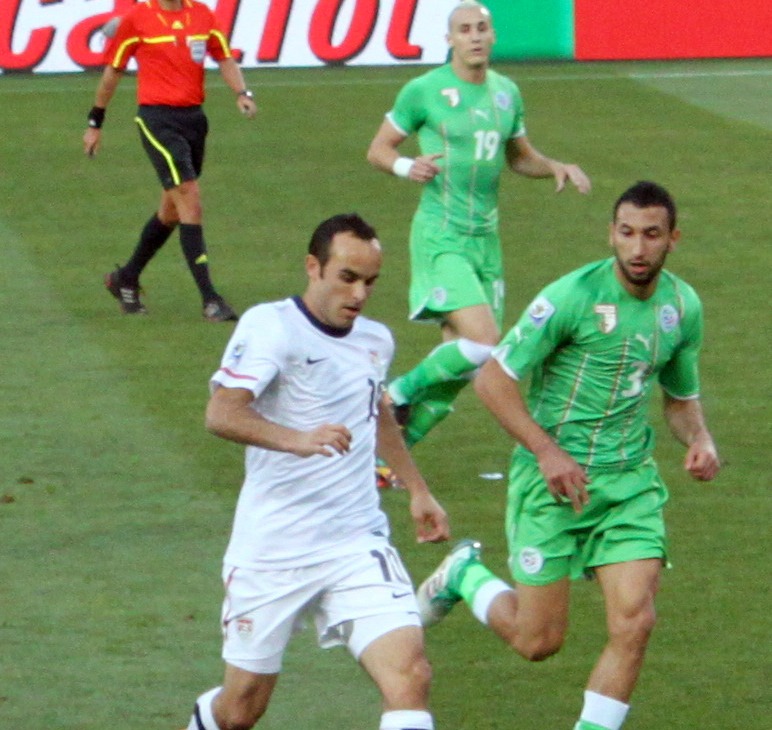
2. Donovan vs. Algeria (2010 Group Stage)
The most dramatic moment in USMNT history. Not the biggest result on this list (Algeria was the weakest team in Group C), but the moment that every American who watched will remember exactly where they were when it happened.
Down to their last gasp in the 91st minute of a scoreless tie, the US needed a goal to advance. England was beating Slovenia in the other group game, meaning a draw would send the team home. Tim Howard threw a long outlet to Donovan, who fed Jozy Altidore on the right. Altidore’s cross found Clint Dempsey, whose shot was saved by Algerian keeper Raïs M’Bolhi. The rebound fell to Donovan, who slammed it past the prone keeper to send the US through as group winners.
The Andres Cantor scream, the bench emptying onto the field, Ian Darke’s “oh, can you believe this,” all of it became the soundtrack of American soccer. The US would lose to Ghana in extra time in the next round, but for one moment, an entire country that had spent decades dismissing soccer was watching the same goal and reacting the same way.
1. Dos a Cero: USA 2, Mexico 0 (2002 Round of 16)
The greatest 90 minutes the US men have played in the modern era. Brian McBride opened the scoring in the 8th minute, finishing Josh Wolff’s cutback with a low right-footed shot. Landon Donovan added the second in the 65th, heading home an Eddie Lewis cross from the left. Mexico had Rafa Márquez sent off in the 88th minute for a head-butt on Cobi Jones, capping a thoroughly unraveled performance by El Tri.
The result remains the furthest the US has advanced at a World Cup in the modern era. Bruce Arena’s team would lose 1-0 to Germany in the quarterfinal in a game they probably deserved to draw or win (Michael Ballack scored, Torsten Frings handled a goal-bound shot off the line that should have been a penalty and probably a red card). But reaching the final eight still represents the high water mark of the modern program, and doing it by beating the rival on the way is the part that makes it sit alone at the top of this list.
What makes the Mexico win even sweeter is what preceded it. The US had backed into the knockout round on tiebreakers after a 3-1 loss to Poland in the final group game. Drawing Mexico, who looked the more talented and more confident regional power coming in, felt like the end of the road. Instead, the US controlled the match from kickoff to whistle and dispatched their rival emphatically. The phrase “Dos a Cero” had been associated with qualifier wins over Mexico in Columbus before this. This was the first time it carried a World Cup result.
Looking Ahead
These 10 moments span 37 years and four generations of US players. Caligiuri’s qualifier strike, the 1994 Colombia win, the 2002 Mexico and Portugal performances, the 2010 and 2014 runs, and the 2022 group stage built the platform the current team will inherit this summer.
The 2026 World Cup gives this group an unprecedented opportunity. Home soil, an expanded 48-team field, an experienced core of European-based players, and a manager in Mauricio Pochettino who has actually won at the highest level. The chance to add a new entry to this list, maybe even one that pushes the program past its 2002 quarterfinal ceiling, is right there.
Whether the current team can deliver something worthy of inclusion is the question that will define this summer. The first halves against Belgium and Portugal in March suggested they can hang with top opponents. The second halves suggested they still have work to do.