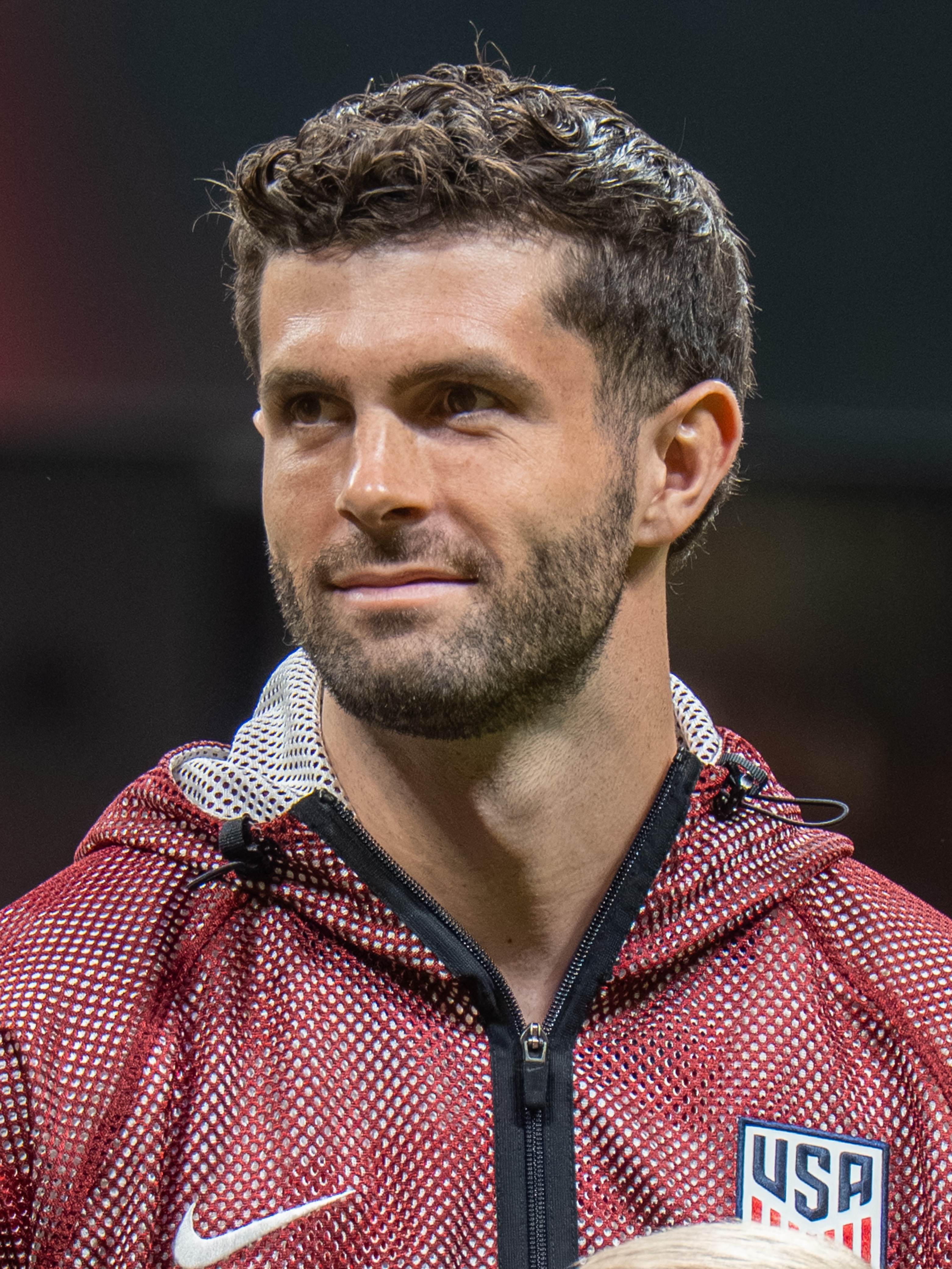
Group: D — United States, Paraguay, Australia, Türkiye
How they Qualified: Qualified automatically as co-hosts. The United States are hosting the 2026 World Cup alongside Mexico and Canada.
Best World Cup Finish: 3rd Place (1930) — Quarterfinals in modern day (2002)
Transfermarkt Roster Value: $419.6 M
FIFA Rank: 16
Odds to Win Group: +125
Odds to Advance: -750
Odds to Win Cup: 60-1
Key Players:
- Christian Pulisic — Winger/Attacking Midfielder — AC Milan (Italy). Pulisic is still the face of the team and the player most responsible for turning the U.S. from organized and athletic into actually dangerous. Transfermarkt values him at $58.8m, the highest mark in the current U.S. pool. Pulisic was involved in every key goal in the 2022 World Cup and has largely revived his club career at AC Milan. However, he has been in an extended scoring drought since the start of 2026. The most important thing for the U.S. team is having a healthy Pulisic in June. He has been dealing with a muscle injury at Milan recently, but should be ready for the World Cup.
- Weston McKennie — Midfielder — Juventus (Italy). While Pulisic is the household name and face of the team, McKennie is the American in the best form entering the tournament. Transfermarkt values him at $35.3m, and his role is not just about midfield running. He gives the U.S. ball-winning, late runs into the box, aerial threat, and some of the edge this team badly needs in tight tournament games. In a group with Paraguay’s physicality and Türkiye’s technical midfield, McKennie’s ability to make the game messy in a useful way matters. His versatility has been an asset at Juventus this season and will allow Pochettino to fit McKennie’s role to the game and opponent.
- Chris Richards — Center Back — Crystal Palace (Premier League). Richards has become the most important defender in the pool. He is the linchpin along the U.S. back line. The U.S. can talk all it wants about pressing, vertical play and home-field energy, but if Richards is not healthy and sharp, the whole defensive structure becomes much more fragile. He is the lone centerback in the pool that combines both elite athletic ability and calmness and competence on the ball.
Playing Style and Outlook
The U.S. is one of the hardest teams in the tournament to separate from the noise around them. On one hand, the American player pool is as talented as it has ever been, they are playing at home, and they got a group they can absolutely win. On the other hand, the recent form has not exactly been calming. The March window was ugly with a 5-2 loss to Belgium and a 2-0 loss to Portugal, two teams ranked well above them on this list. Pochettino called the Belgium match a “reality check.”
Tactically, the U.S. has experimented with multiple different setups during Pochettino’s tenure. While the initial configuration may still vary, Poch has landed on a system that he has described as a 4-2-3-1 without the ball and a 3-5-2 in possession, with one outside back usually advancing and a winger, usually Pulisic, drifting inside.
The exact way that back three and attacking three have formed has varied depending on opponents and personnel. At times that has meant starting three center backs, while at other times it has formed with the deepest central midfielder dropping between the center back duo. In the attack, the front three is centered around Balogun at striker, but could include two true wingers or one winger and an attacking midfielder like Reyna, Tillman or McKennie.
Regardless of formation, the basic identity for the U.S. is athletic, vertical, pressing-oriented, and at their best when they can force turnovers and attack before the opponent is set. They hope to be a high-press team built around vertical transitions, attacking fullbacks and home advantage, especially against weaker group opponents. That is the version of the U.S. that can scare teams. Pulisic can drive inside, Antonee Robinson can fly forward on the left, Weah and/or Dest gives speed on the right, McKennie can crash the box, and Balogun gives them a more dynamic penalty-box striker than they have had in some past cycles.
The problem is that this version of the U.S. has not always looked controlled. When the press is late or the midfield spacing stretches, the center backs can be exposed quickly. That is why the back line composition matters so much. Tim Ream brings experience and calm passing, but at 38, asking him to defend a high line in a World Cup is risky. Richards has the athletic profile to make that structure work, but he needs the right partner and enough midfield protection in front of him.
The midfield is the other hinge point. Tyler Adams, if fully fit, is still the cleanest defensive anchor. McKennie gives them the engine. The third spot could determine the personality of the team: Malik Tillman for more creativity, Tanner Tessmann or Cristian Roldan for more control, or another more conservative option if Pochettino wants to protect the back line. Johnny Cardoso would have been a serious option there, but he unfortunately required ankle surgery in early May, making him doubtful to return in time for the World Cup.
Going forward, the U.S. probably need to accept that they are not going to look like a classic possession team. They can keep the ball in stretches, and they may have more of it against Australia and Paraguay, but the best version of this team is not slow buildup for its own sake. It is quick recoveries, direct attacks, runners flooding forward, and Pulisic or Balogun turning a half-opening into something real.
The recent meetings with all three group opponents reinforce that point. Against Australia in October, the U.S. controlled possession early against Australia’s condensed middle block, but the goals did not come from patiently passing the Socceroos to death. Both goals came from quick transitions with Cristian Roldan playing into Haji Wright. That match is encouraging because Australia entered on a 12-match unbeaten run, and the U.S. ended it. But it also was a friendly, Australia will look different in a World Cup setting, and the U.S. was still experimenting. Christian Pulisic started and captained the side but came off in the 31st minute, while Tyler Adams, Sergiño Dest, Ricardo Pepi and Johnny Cardoso were not in that October camp.
The Paraguay friendly in November was a great preview for the group opener’s emotional tone. The U.S. won 2-1, with Gio Reyna scoring early and Folarin Balogun getting the second-half winner, but Paraguay made the match uncomfortable almost immediately. Miguel Almirón created the equalizer for Alex Arce in the 10th minute, and the game had the physical, edgy feel you would expect from a World Cup opener against a South American side.
Paraguay also used a serious attacking group, with Almirón, Julio Enciso and Arce starting, so it was not just a meaningless runout against a stripped-down opponent. The win was even more impressive when you consider the talent missing for the US. Pulisic, Weston McKennie, Tim Weah, Malik Tillman, Antonee Robinson, Chris Richards and Tyler Adams were all missing from that November roster for a mix of injuries and selection management.
The Türkiye match was a potential warning sign, though more on the talent and capabilities of the Turkish team than concerns for the US. The U.S. lost 2-1 last June after Jack McGlynn scored in the opening minute, then Türkiye punished two messy defensive sequences through Arda Güler and Kerem Aktürkoğlu. That game came with a large caveat — it was a young, Gold Cup-leaning U.S. group, a starting XI averaging only 13 caps, missing most of the usual starters. However, the lesson still applies: Türkiye have the kind of technical attackers who can turn one bad giveaway or one poorly cleared ball into a goal. That is exactly the kind of opponent that can punish a U.S. team still figuring out how aggressive it wants to be in buildup.
This group is both promising and dangerous for the U.S. Australia are the weakest team on pure talent, but they are organized, experienced and comfortable defending in a compact shape. Paraguay are the kind of opponent that can ruin an opener with physicality and counter-attacking. Türkiye are the most dangerous team in the group from a talent standpoint, with Güler, Kenan Yıldız and Hakan Çalhanoğlu giving them more high-end technical quality than the U.S. will want to see in a group finale.
The path is there for the U.S. to win the group, but the margins are not huge. The challenge for Pochettino is finding the right balance between patient possession and vertical attacking that leverages the athleticism and skill of players like Balogun and Pulisic.
That final match against Türkiye in Los Angeles could very well decide the group. The betting odds have the U.S. as the slight Group D favorite, but not by much, with Türkiye close behind. That feels about right. The U.S. should get through. They should probably be favored to win the group. But they are not talented or consistent enough to sleepwalk through it.
With the excitement of the home World Cup and the talent possessed in this iteration of the team, anything short of the knockout rounds would be a disaster. A Round of 32 exit would feel similarly disappointing. A quarterfinal would probably be viewed as a successful home World Cup. Anything beyond that would require the best version of the top U.S. stars, a settled midfield, and a defense that looks much cleaner than it did in March. The ingredients are there. The question is whether Pochettino can turn them into a cohesive team quickly enough.